
Period Underwear —
Everything You Need
to Know
40 honest answers to the questions women actually ask about period underwear — from how they work to how to wash them, and everything in between.
Period underwear is one of the most searched but least understood period products on the market. Whether you are completely new to them or have tried a pair and are not sure you are using them correctly, this guide covers every question — from the basics of how they work to the nuances of care, sizing, and when they are and are not the right choice. No fluff. No shame. Just answers.
How Period Underwear Actually Works
Yes, and the mechanism is simpler than most people expect. Unlike a pad that sits on top of your underwear, period underwear has an integrated gusset built into the fabric itself. This gusset is made up of three distinct layers working together:
- Top layer (moisture-wicking): Pulls liquid away from your skin immediately, keeping you feeling dry to the touch.
- Middle layer (absorbent core): The “sponge” that locks fluid inside the fabric and holds it there.
- Bottom layer (waterproof barrier): A thin TPU (thermoplastic polyurethane) layer that prevents any fluid from passing through to your clothing or bedding.
Yes, leakage is possible — but it is almost always a result of user error or product mismatch rather than a fundamental flaw in the garment.
- Capacity: Every pair has a specific absorbency rating. If your flow exceeds the capacity of the gusset, the liquid will have nowhere to go and may leak at the edges or seams.
- Fit: If the leg holes are too loose or the waistband sits incorrectly, the garment cannot maintain the seal necessary to trap fluid. The underwear must sit snugly against your body at all points of contact.
Because these garments wick moisture away from your skin, you will not always feel wetness the way you would with a soaked pad. Instead, look for these indicators:
- Weight: The gusset will feel slightly heavier or more substantial than when it was clean.
- Visibility: Depending on the colour of the gusset, you may notice a change in saturation.
- Time: After a few cycles, you will learn your own flow patterns. If you know you typically need to change every 6 hours, do not wait for a physical indicator.
This depends entirely on your flow. A useful rule of thumb:
- Light days: 1–2 tampon capacity
- Moderate days: 2–3 tampon capacity
- Heavy or overnight: 4+ tampon capacity
Assess your flow based on how often you currently change your pads or tampons, and choose your pairs accordingly.
Sizing, Fit & Comfort
Sizing is critical for leak prevention. Start by measuring your natural waist and hips and comparing them to the brand’s specific size chart, as period underwear sizing differs significantly from standard clothing sizing.
Most modern period underwear is designed to be thin and discreet. While the gusset is thicker than standard underwear, it is generally much thinner than a traditional pad. Seamless styles are particularly good for wearing under leggings or fitted jeans, as they remain invisible. FlowGuard™ is specifically engineered to look and feel like regular underwear from the outside.
Chafing happens when the fit is wrong. If the elastic is too tight or the gusset is too wide for your body shape, friction will occur. If you experience chafing, try a different cut (for example, a high-leg brief versus a boyshort) or a brand that uses a softer, more flexible fabric. The issue is almost always fit-related, not product-related.
This is a matter of personal preference. Period underwear is more secure because it cannot slide out of position the way a cloth pad can. However, cloth pads are easier to change on the go — you can swap the pad and keep the underwear on. Many people prefer underwear for the comfort and pad-free feeling, especially overnight.
Health, Safety & Hygiene
While period underwear is generally designed with safety in mind, some users may experience irritation. This typically occurs due to trapped moisture or friction, usually when the fabric is not sufficiently breathable.
- Prevention: Prioritise brands that use natural, moisture-wicking fabrics like organic cotton or bamboo. Synthetic materials that are not specifically engineered for breathability can exacerbate irritation.
- Hygiene: Change your pair regularly, especially on heavy flow days. Avoid harsh or heavily scented detergents, as residual chemicals can trigger contact dermatitis.
Gynecologists generally do not recommend one specific brand, but they consistently advocate for specific qualities:
- Natural fibres: High-quality cotton or bamboo linings that allow the vulva to breathe.
- No fragrances: Avoid any product that claims to be scented, as these chemicals can disrupt your natural vaginal pH and cause infections.
- Proper fit: Underwear that is not so tight it prevents airflow, as restrictive clothing can increase the risk of yeast infections or bacterial vaginosis during your cycle.
Odour is typically caused by bacteria buildup when fluid stays on the skin or fabric for too long. Period underwear made with antimicrobial fabrics — such as silver-infused linings or high-quality bamboo — are specifically designed to neutralise odours. If you notice an odour, it is generally a sign that the garment has been worn too long or has not been washed thoroughly enough.
Watch for these red flags that indicate poor quality or potential health risks:
- Hidden ingredients: Avoid brands that do not disclose their full material list or that use PFAS (often listed as water-repellent coatings).
- Plastic texture: If the lining feels like a plastic bag, it will be uncomfortable and trap heat.
- Aggressive marketing: Be wary of brands that promise miracle absorbency levels that seem unrealistic. Always check third-party reviews.
Yes. In the United States, period underwear is widely considered a qualified medical expense. Under the CARES Act, feminine hygiene products — including period-proof apparel — are eligible for reimbursement through Flexible Spending Accounts (FSA) and Health Savings Accounts (HSA). You can use your card directly at many major retailers or submit your receipt for reimbursement.
How & When to Wear Them
This depends entirely on your flow:
- Light flow or spotting: Some pairs can be worn for up to 12–24 hours.
- Moderate flow: Typically 6–8 hours before changing.
- Heavy flow: May need changing every 4–6 hours. Pay attention to how the gusset feels — if it starts to feel damp to the touch, it is time to switch to a fresh pair.
Yes, provided you choose the correct absorbency. For a 12-hour shift, choose a Super or Overnight style designed for high-volume absorption. If your flow is heavy, consider bringing a second pair to change into halfway through your shift to maintain hygiene and comfort.
Yes. Many people successfully use them as their sole method of protection. However, this requires having enough pairs to rotate through your cycle — typically 5–7 pairs. If you are a beginner, it is recommended to test them as a backup to a tampon or cup first, to build confidence in how they perform with your particular flow.
Simply wear the tampon as you normally would, and wear the period underwear as your backup layer. If the tampon leaks, the underwear catches it. This is a common strategy for those with heavy flows or on days when you cannot easily access a restroom — important meetings, long commutes, exams.
Yes. Many people wear them daily for discharge, light bladder leaks, or as a preventative measure for when they expect their period to start. They function as regular underwear with an extra layer of protection built in — there is no reason to limit them to period days only.
Absolutely. They are a favourite among athletes because they do not shift like pads and do not have strings like tampons. Look for athletic cut or bikini styles that offer a snug, secure fit. They work well for yoga, running, and heavy lifting. Just note that heavy perspiration combined with menstruation may mean you need to change sooner than usual.
Yes, but you must select the appropriate absorbency level. Heavy or Super pairs can hold the equivalent of 3–4 tampons. If your flow is exceptionally heavy — for example, if you are changing a super-tampon every 1–2 hours — period underwear alone may not be sufficient, and you should consider layering with a menstrual cup or disc.
Yes, and they are often more comfortable for overnight use. Because they cover the entire gusset area, there is no risk of the pad shifting while you sleep. Look for high-waisted or full-coverage styles, which provide additional security throughout the night.
They are perfect for this use case. Because they are more comfortable than wearing a pantyliner every day, they are an excellent solution for irregular bleeding, spotting, or the first day of a period when you are not quite sure of timing.
Yes — having a wardrobe of absorbency levels is the most efficient way to manage your cycle. You might wear a Super pair on day 2 and a Light pair on day 5. This ensures you are comfortable without wearing bulkier protection than your flow requires on lighter days.
Yes. Unlike pads that can slide and cause chafing throughout the day, period underwear stays in place. As long as you choose a pair that fits your body type correctly and select the right absorbency for your flow, they are arguably the most comfortable way to manage a period during a full workday.
For blue-collar or physically active work, look for full-coverage briefs or boyshort styles. These provide the best security against shifting during movement. Materials like nylon and elastane blends are often more durable and moisture-wicking than pure cotton for long-duration wear in demanding environments.
They are ideal for travel. They reduce the luggage space required for disposables and remove the anxiety of running out of products mid-trip. The main consideration is the washing process — if you are staying in a hotel, you will need to rinse them in the sink and hang them to dry, which requires a private, well-ventilated space.
Cold weather does not affect the performance of the fabric itself, but it does significantly slow the drying process. In humid or cold climates, your underwear will take longer to air-dry after washing. If you live in a cold region, you will need to own more pairs to ensure you always have a dry one available, or use a small fan to assist with drying.
Washing & Care
Follow these steps to preserve both the absorbency and the waterproof lining:
- Rinse first: Immediately after removing, rinse in cold water until the water runs clear.
- Pre-treat (optional): If you are concerned about staining, apply a small amount of gentle soap before washing.
- Machine wash: Place them in a mesh laundry bag to protect the elastic and fabric. Use a delicate cycle with cold water and mild detergent.
- Avoid additives: Never use fabric softener or bleach. Softener leaves a coating on the fabric that permanently ruins its moisture-wicking ability.
Look for a combination of materials that serve different functions:
- Outer fabric: Nylon or polyester/spandex blends for stretch, durability, and shape retention.
- Gusset lining: Bamboo, cotton, or moisture-wicking synthetic blends treated for odour control. Avoid 100% synthetic linings if you have sensitive skin.
Lifespan & Value
With proper care — no tumble drying, no bleach, cold water washing — a quality pair of period underwear can last between 1 and 3 years. You will know it is time to replace them when the absorbent core no longer holds as much fluid as it used to, or if the waterproof lining begins to crack or flake.
If you are rotating through 5–7 pairs regularly, expect to replace your full set every 2 years on average. A reliable indicator that it is time to replace a pair: a lingering smell that persists even after a thorough wash. This means the antimicrobial properties of the fabric have worn off.
Honesty matters to us, so here are the real drawbacks:
- Initial cost: The upfront investment is higher than a box of tampons, though the long-term savings are significant.
- Maintenance: They require rinsing, careful washing, and air drying, which requires more time and space than simply disposing of a product.
- On-the-go changing: If you need to change while out, you have to carry a used pair until you get home — unlike disposables, which you can throw away immediately.
- Versus pads: Period underwear is far more secure, does not bunch up, and eliminates the plastic feeling and noise associated with most disposable pads.
- Versus tampons: Period underwear is external, meaning there is no risk of Toxic Shock Syndrome (TSS) associated with internal products, and they are generally more comfortable for those who find internal products painful or difficult to use.
- Environmental impact: They are a reusable, low-waste alternative to the thousands of disposable products a person uses over a lifetime.
To successfully make the switch:
- Invest in a few different absorbency levels to cover different days of your cycle.
- Follow care instructions strictly — the waterproof barrier is the most vulnerable part of the garment.
- Treat them as a garment that requires more care than standard underwear: rinse before washing, always air dry.
- Start by wearing them as a backup to your current product on a lighter day. Build confidence before going all in.
If you have tried different sizes and absorbency levels and are still experiencing issues, do not force it. Some people genuinely prefer internal products like menstrual cups or discs, and that is completely valid. Check the return policy of the brand you purchased from, and consider donating unused or unopened pairs to a local women’s shelter if they do not suit your needs.
The only way to know is to try it. Purchase one pair in a moderate absorbency, in a style you usually find comfortable. Wear it on a day when you are at home for an extended period. If you find the absence of bulk and the security of the fit superior to your current method, it is likely the right choice for your lifestyle.
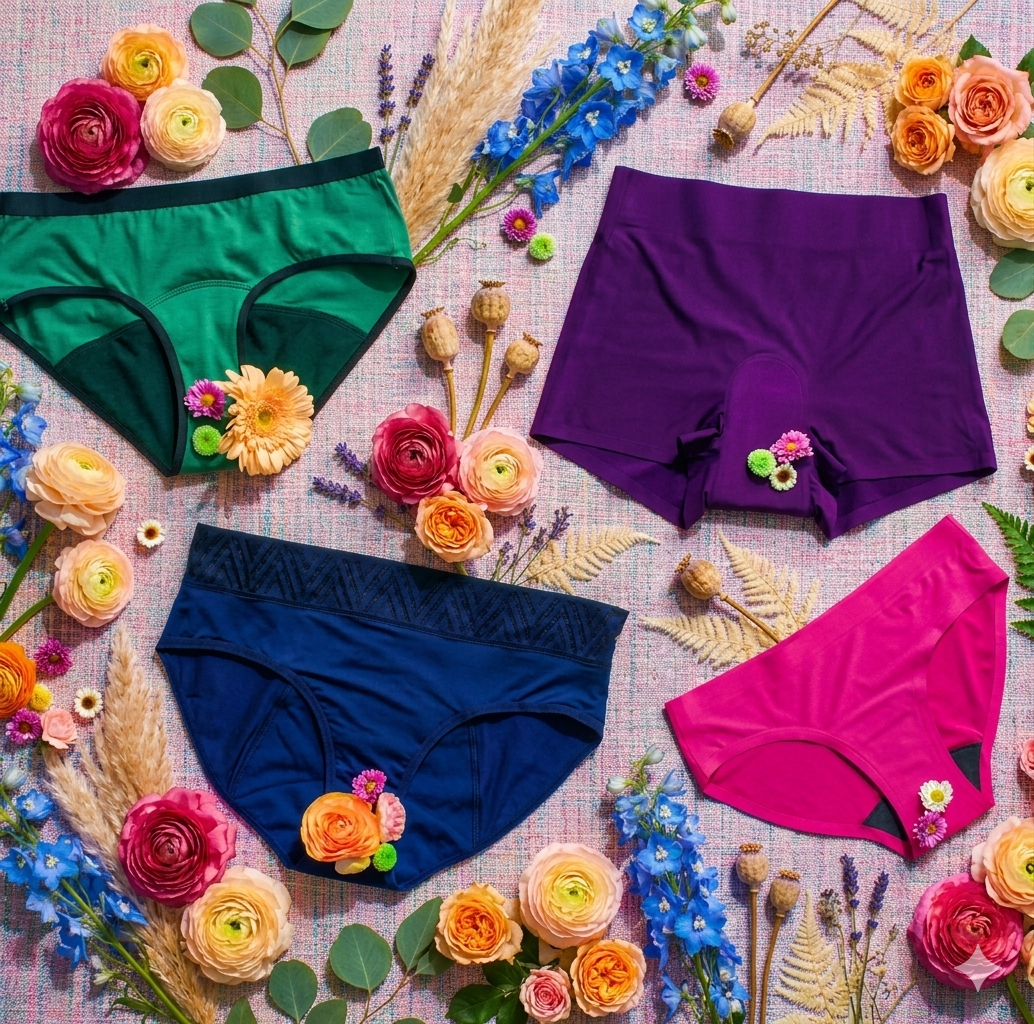
4-layer leak protection. Sizes S–XXXL. Free worldwide shipping. 30-day guarantee.
Shop Now